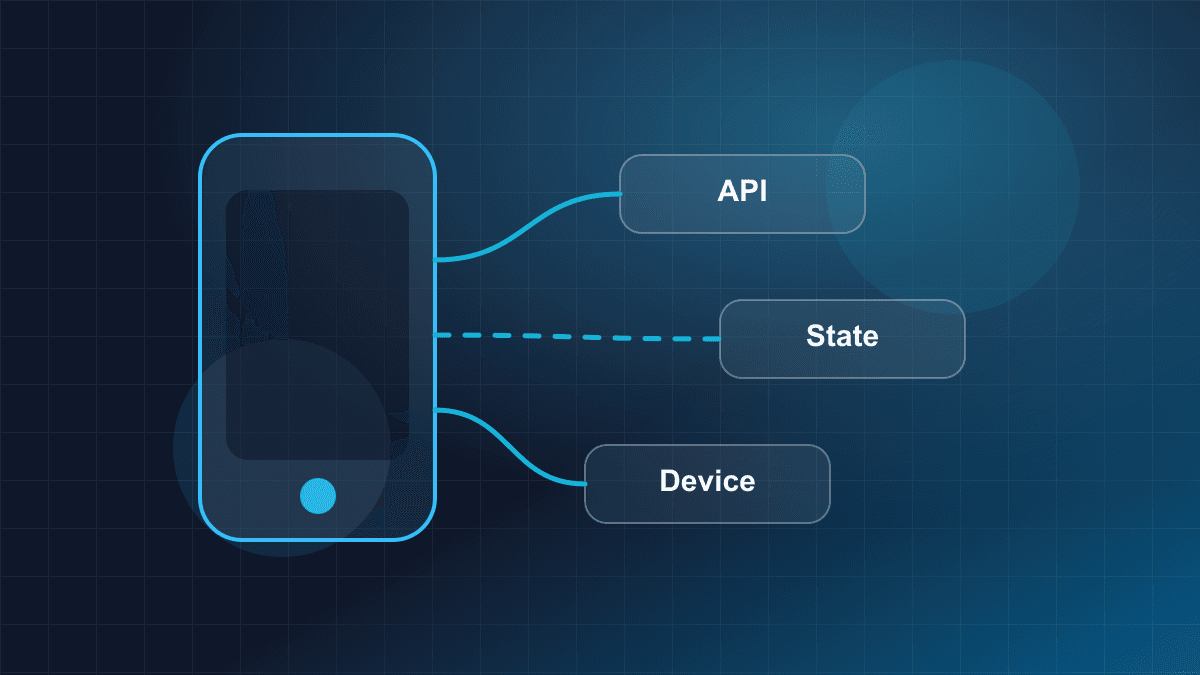
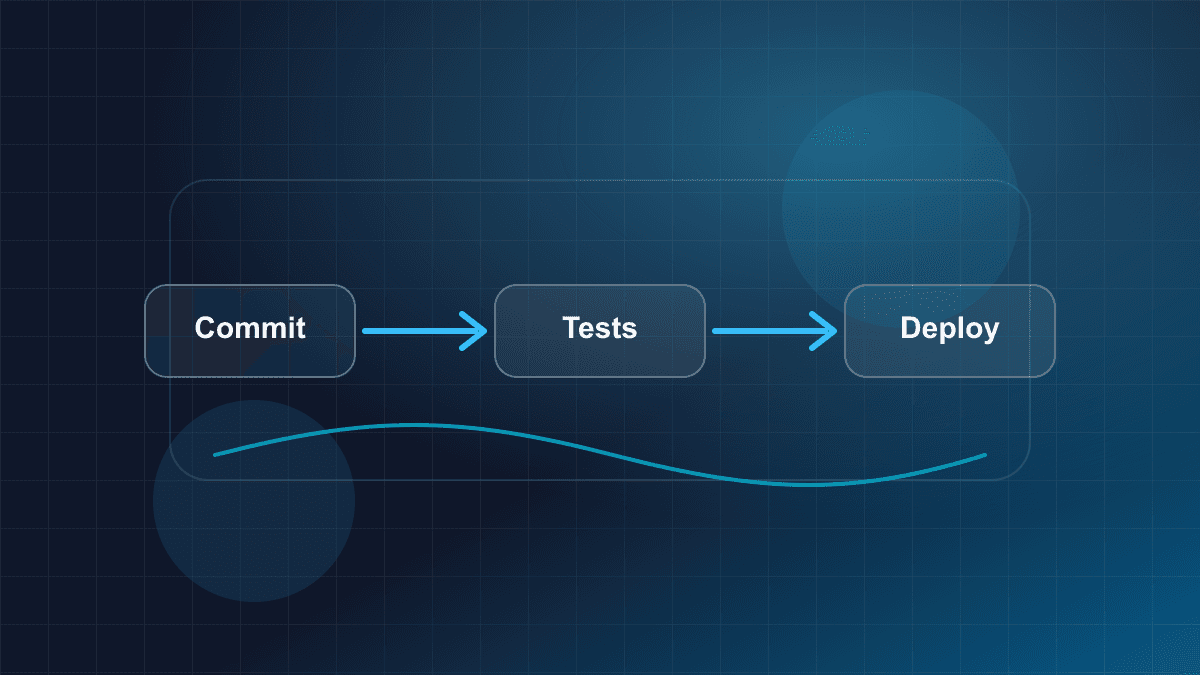
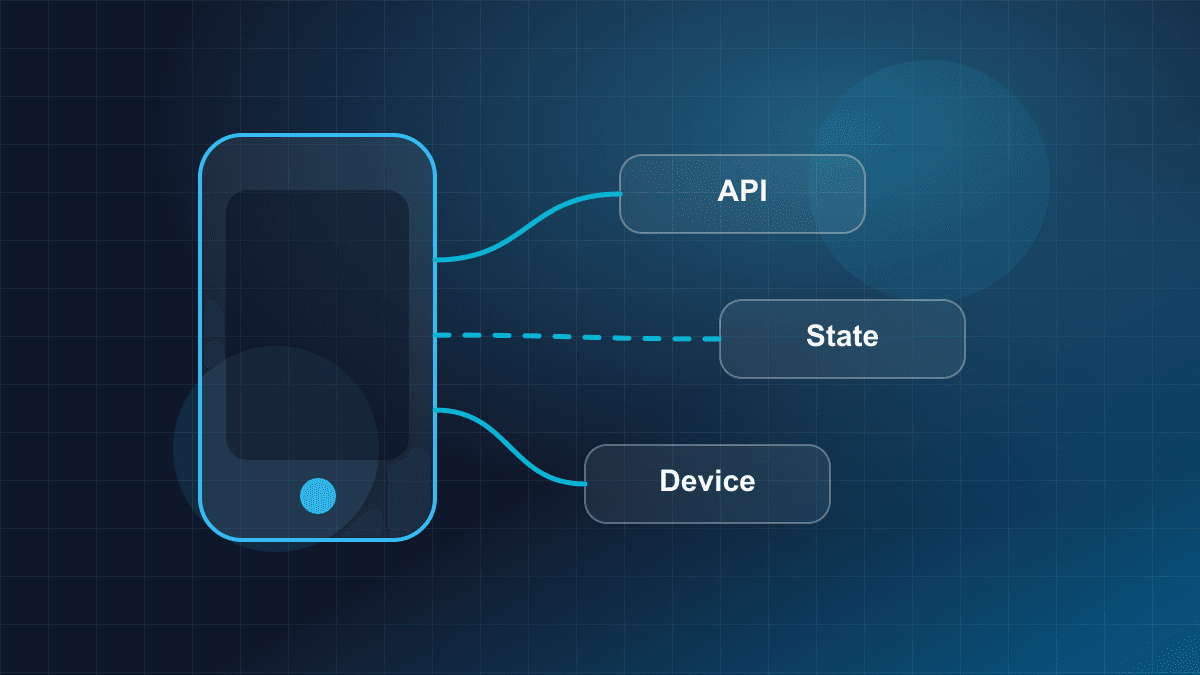
Why Flutter Works for Business Mobile Products
Flutter is a strong choice when a business needs polished mobile UX, consistent behavior, and a practical path across platforms.
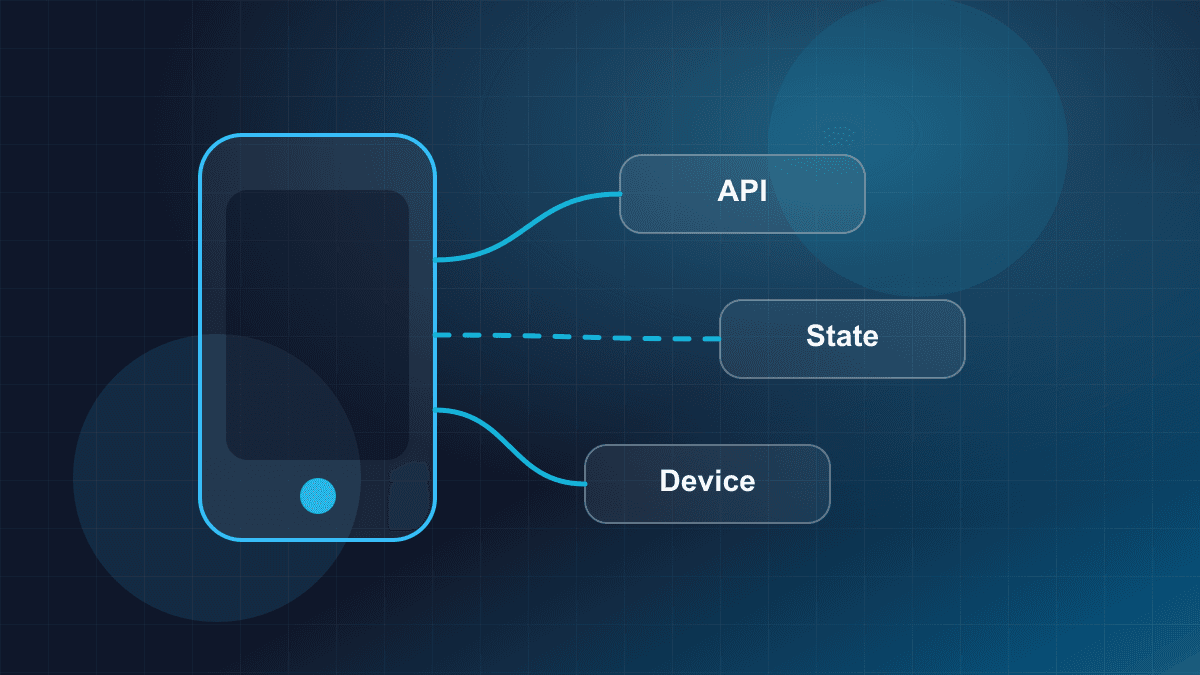
Why Flutter Can Be a Practical Choice for Businesses
Choosing a technology for a business application is rarely a question of which framework is the most popular.
The more useful question is:
Which technology gives the product team an appropriate balance of development speed, user experience, maintainability, platform coverage, and long-term cost?
For many businesses, mobile software has to support more than one platform. A company may need an iOS application, an Android application, a web presence, an internal dashboard, and backend services at the same time.
That creates an engineering problem.
Building separate native applications can provide excellent platform-specific integration, but it also means maintaining multiple application codebases.
A cross-platform framework can reduce duplication, but the framework must still provide enough control over performance, user experience, native integrations, testing, and long-term maintenance.
Flutter is one option in that space.
Its value for a business is not simply that one codebase can target multiple platforms. The more important question is whether the development model remains productive as the application becomes larger and the product requirements become more demanding.
This article examines where Flutter can make sense for businesses, where it introduces trade-offs, and what teams should evaluate before adopting it.
Technology Decisions Should Start With Product Requirements
A business should not begin with:
"We need Flutter."
It should begin with:
- Which platforms are required?
- How quickly does the product need to evolve?
- How much platform-specific behavior is required?
- What is the expected application lifetime?
- How large will the engineering team become?
- Which native integrations are required?
- What performance characteristics matter?
- What skills already exist within the team?
The framework should be selected after answering those questions.
For example, a business application that mainly contains:
- forms
- dashboards
- account management
- content
- workflows
- API-driven data
may have different technology requirements from an application that depends heavily on specialized platform capabilities or advanced graphics.
There is no universally correct framework.
There is only a better or worse fit for a particular product.
The Multi-Platform Problem
Suppose a business wants:
iOS
Android
Web
With separate native applications, the implementation may look like:
iOS
  └── Swift / SwiftUI

Android
  └── Kotlin / Jetpack Compose

Web
  └── JavaScript / TypeScript
This can provide strong platform-specific capabilities.
It also creates multiple implementation paths.
A feature such as:
Authentication
Profile
Search
Notifications
Payments
Settings
may need to be implemented and maintained separately.
A cross-platform framework changes that equation.
With Flutter, much of the application logic and UI can be shared:
                    Shared Flutter Code
                    /       |       \
                   /        |        \
               iOS        Android     Web
The amount of sharing depends on the product.
The important advantage is not simply fewer files.
It is the possibility of reducing duplicated product logic.
One Codebase Does Not Mean Zero Platform Work
A common misunderstanding is:
"If Flutter is cross-platform, we never need native code."
Real applications are more complicated.
A production application may need:
- camera access
- biometrics
- push notifications
- background processing
- platform-specific permissions
- deep links
- payment integrations
- native SDKs
- device capabilities
Flutter can communicate with platform-specific functionality, but teams still need to understand the platforms they support.
The realistic model is:
Shared application layer
        ↓
Flutter
        ↓
Platform integration where necessary
        ↓
iOS / Android / Web
Cross-platform development reduces duplication.
It does not eliminate platform engineering.
Development Speed Is More Than Writing Code Faster
Businesses often evaluate frameworks based on development speed.
That is useful, but speed should be measured across the product lifecycle.
Consider:
Feature request
   ↓
Implementation
   ↓
Testing
   ↓
Review
   ↓
Release
   ↓
Maintenance
A framework is productive when it keeps this entire loop efficient.
Flutter can be attractive because teams can share substantial UI and application logic across supported platforms.
A bug in shared code may also be fixed once rather than separately in multiple applications.
However, the real benefit depends on how much of the product can actually be shared.
Shared Code Can Reduce Product Drift
Separate implementations can gradually behave differently.
For example:
iOS
→ New validation rule

Android
→ Old validation rule
Or:
iOS
→ New onboarding flow

Android
→ Previous onboarding flow
Sometimes this difference is intentional.
Sometimes it is simply the result of maintaining two codebases.
Shared application logic can reduce this kind of accidental divergence.
The team still needs platform-specific decisions where appropriate, but common business behavior can remain centralized.
Consistency Can Be a Business Advantage
A business may want users to experience the same product regardless of device.
Shared UI and application logic can make that easier.
For example:
Login behavior
Account settings
Search
Data validation
Subscription state
Error handling
can follow a common implementation.
This can simplify:
- product decisions
- QA
- support
- documentation
- bug fixing
Consistency is not always the goal.
Some products should intentionally adapt to platform conventions.
Flutter simply makes a shared implementation possible when that is desirable.
Flutter's Rendering Model
Flutter uses its own rendering approach rather than simply translating each widget into a native UI control.
This provides significant control over the appearance and behavior of the interface.
That can be valuable when a product needs:
- custom design systems
- consistent visuals
- complex interactions
- animated interfaces
- branded components
The team can build a UI that is highly controlled across platforms.
The trade-off is that developers still need to understand platform conventions and accessibility expectations.
A visually consistent application should not become an application that ignores how users expect a platform to behave.
Performance Depends on the Application
A framework choice should never be reduced to:
"Is Flutter fast?"
The better question is:
"Can Flutter deliver the performance required by this product on the supported devices and workloads?"
For many business applications, the workload consists largely of:
- forms
- lists
- network requests
- dashboards
- animations
- local storage
- business logic
These workloads can perform well when the application is designed and profiled properly.
Performance problems can still occur because of:
- excessive rebuilds
- inefficient lists
- oversized images
- expensive synchronous computation
- large data transformations
- poor network architecture
The framework does not remove the need for performance engineering.
Measure Production-Like Workloads
A business should evaluate performance using realistic conditions.
Do not test only:
Fast developer computer
Small dataset
Excellent network
Debug environment
Also test:
Representative device
Production-scale data
Slower network
Realistic images
Profile/release-like build
A dashboard with twenty records may feel perfect.
The same dashboard with twenty thousand records can expose an architectural problem.
Technology evaluation should therefore include realistic workload testing.
Business Applications Benefit From Predictable UI Architecture
Many business applications contain repeated structures:
Navigation
Forms
Tables
Lists
Filters
Dialogs
Dashboards
Cards
Settings
Flutter's widget-based model makes these components composable and reusable.
A team can establish a design system containing:
AppButton
AppTextField
AppCard
AppDialog
AppTable
AppEmptyState
and use those components throughout the product.
This can improve consistency and reduce repeated implementation.
The value increases as the product grows.
Design Systems Become Easier to Centralize
A business application often has a visual language:
- typography
- spacing
- colors
- buttons
- form controls
- cards
- navigation
- error states
If each platform implements these separately, the design system can drift.
A shared Flutter application can centralize much of the implementation.
For example:
Design Tokens
     ↓
Shared Components
     ↓
Feature Screens
This does not mean every platform detail should be identical.
It means the product can maintain a common foundation.
Accessibility Must Remain an Explicit Requirement
Cross-platform does not automatically mean accessible.
A production business application should consider:
- screen readers
- semantic labels
- text scaling
- contrast
- touch targets
- keyboard navigation where relevant
- focus behavior
- reduced-motion expectations where applicable
Accessibility should be tested as part of product development.
It should not be assumed to emerge automatically from the framework.
Native Integrations Are Still Possible
Business applications frequently depend on native services.
Examples include:
- biometric authentication
- secure storage
- camera
- location
- notifications
- platform sharing
- native payment systems
- device permissions
Flutter provides mechanisms for communicating with platform-specific functionality.
The architecture can therefore remain mostly shared while allowing specialized native implementations where needed.
Conceptually:
Flutter feature
      ↓
Platform abstraction
      ↓
iOS implementation
Android implementation
Web implementation
This is a useful model for capabilities that cannot or should not be implemented identically across platforms.
Evaluate Native Dependencies Early
A framework may look perfect until a critical requirement depends on a native SDK that is difficult to integrate.
Businesses should therefore identify important integrations before committing to a technology.
Create a list such as:
Authentication
Payments
Push notifications
Maps
Analytics
Camera
Biometrics
Storage
Background processing
Then verify that the required capabilities are supported adequately for every target platform.
This is much cheaper than discovering a critical compatibility problem halfway through development.
Backend Architecture Matters More Than the UI Framework
A common mistake is treating framework selection as the main architectural decision.
The UI framework is only one part of the system.
A production application may look like:
Flutter
   ↓
API
   ↓
Business services
   ↓
Database
   ↓
External integrations
Poor backend design can make an excellent Flutter application feel slow and unreliable.
For example:
Slow API
+
Large responses
+
Sequential requests
=
Slow application
Changing the UI framework would not necessarily solve the problem.
Technology decisions should therefore evaluate the complete product architecture.
Offline Behavior Can Be a Major Advantage
Some business applications need to work when connectivity is unreliable.
Examples include:
- field-service applications
- inventory tools
- delivery workflows
- inspection applications
- data collection
- travel-related workflows
A cross-platform client can implement local persistence and synchronization while sharing much of the logic.
But offline support is not simply:
Save data locally.
It raises questions about:
- conflict resolution
- synchronization
- retries
- authentication
- stale data
- partial failures
- ordering
- duplicate operations
The framework can help build the client.
The synchronization model still requires careful system design.
Testing Shared Code Can Be Efficient
When application logic is shared, tests can also cover shared behavior.
For example:
Validation
Business rules
Data transformation
State transitions
Formatting
can often be tested once.
This can reduce duplicated testing effort.
However, platform-specific behavior still needs platform-specific testing.
For example:
Shared logic
→ unit tests

iOS integration
→ iOS tests

Android integration
→ Android tests

Web behavior
→ web/browser tests
The goal is not to test everything in one environment.
It is to test each responsibility at the appropriate level.
Release Management Still Differs by Platform
A shared codebase does not create a single release process.
iOS and Android have different distribution systems, policies, signing requirements, and review processes.
Web deployment has a different lifecycle again.
The architecture should therefore separate:
Shared application development
from:
Platform-specific release operations
A typical flow might be:
Shared code
   ↓
Automated tests
   ↓
Platform builds
   ├── iOS
   ├── Android
   └── Web
   ↓
Platform-specific validation
   ↓
Release
This allows the product to share development effort without pretending that all platforms behave identically.
CI/CD Becomes Important as the Team Grows
Manual release processes become increasingly risky when multiple platforms are involved.
Automation can help with:
- formatting
- static analysis
- tests
- builds
- artifact generation
- versioning
- deployment
A production pipeline might look like:
Commit
  ↓
CI checks
  ↓
Tests
  ↓
Build
  ↓
Platform validation
  ↓
Release
The exact pipeline depends on the organization.
The important principle is repeatability.
Team Skills Matter
Technology choices should consider the people who will maintain the application.
If a team already has strong Flutter and Dart experience, Flutter may reduce onboarding and implementation time.
If the organization has extensive native iOS and Android expertise but little Flutter experience, the calculation may be different.
Also consider:
- hiring availability
- internal training
- code ownership
- long-term maintenance
- ability to debug native integrations
The cheapest technology on paper may not be the cheapest technology for the actual organization.
Consider the Long-Term Team Structure
An application can outlive its original developers.
Ask:
Will the team be able to maintain this application three or five years from now?
This means evaluating:
- ecosystem maturity
- package maintenance
- internal knowledge
- documentation
- architecture
- testing
- upgrade processes
The framework itself is only one part of long-term maintainability.
A well-structured application can be easier to maintain than a poorly structured application built with a supposedly safer technology.
Package Dependencies Need Governance
Flutter applications often rely on packages.
Those packages can accelerate development dramatically.
They also become part of the application's dependency graph.
Before adopting a package for an important capability, consider:
- maintenance activity
- compatibility
- licensing
- issue history
- release cadence
- whether the package solves a critical problem
- whether the team could replace it if necessary
Do not add a dependency simply because it saves a few lines of code.
Every dependency creates future upgrade work.
Build a Small Core and Add Dependencies Carefully
A healthy application can distinguish between:
Core business logic
and:
Optional integrations
This makes it easier to replace infrastructure later.
For example:
Application
   ↓
Repository abstraction
   ↓
Storage implementation
can allow the storage technology to change without rewriting the entire feature layer.
Abstraction should still be justified.
Do not create layers only because they sound architecturally sophisticated.
Create them when they protect a meaningful boundary.
Security Should Influence the Architecture
Business applications often handle sensitive information.
Examples include:
- customer data
- financial information
- authentication credentials
- internal records
- business documents
The architecture should therefore consider:
- secure authentication
- authorization
- encrypted transport
- secure local storage
- secret management
- logging hygiene
- dependency security
- backend validation
A mobile client should not be treated as a trusted environment.
Sensitive business rules must be enforced by trusted backend systems.
Protect Secrets From the Client
A common mistake is embedding private credentials inside an application because they are needed to call a service.
Anything shipped to a client should be considered potentially recoverable.
Instead:
Flutter
   ↓
Your backend
   ↓
Private service
The backend can hold privileged credentials and enforce authorization.
The client receives only the information required for its operation.
This architecture also gives the business greater control over external service usage.
Observability Is Part of Business Software
A production application needs to tell its maintainers when something goes wrong.
Useful signals can include:
- crashes
- API failures
- performance problems
- failed critical workflows
- authentication failures
- payment problems
- application versions
The goal is not to collect every possible event.
It is to make important failures visible.
For example:
Release 4.2
   ↓
Crash rate increases
   ↓
Affected devices identified
   ↓
Problem reproduced
   ↓
Fix released
Without observability, production problems may first appear as support complaints.
Analytics Should Support Decisions
Businesses often need to understand how users interact with their applications.
Useful analytics can answer questions such as:
- Where do users abandon onboarding?
- Which features are used most?
- Which workflows take too long?
- Which release changed conversion?
- Which platform behaves differently?
Analytics should be designed around decisions.
Avoid collecting large quantities of events simply because the analytics platform can store them.
More data can create more noise without creating more understanding.
Support and Diagnostics Matter
When a customer reports:
"The application does not work."
the support team needs enough information to investigate.
Useful diagnostic context may include:
- application version
- platform
- relevant feature
- approximate time
- non-sensitive error identifier
This allows the organization to connect:
Customer report
      ↓
Application version
      ↓
Error information
      ↓
Engineering investigation
The process should protect user privacy while still providing enough context to resolve problems.
When Flutter May Not Be the Best Choice
A balanced technology evaluation should also identify cases where Flutter may not be the best fit.
A product may benefit from primarily native development when it depends heavily on:
- highly specialized platform APIs
- advanced platform-specific UI
- deep operating-system integration
- hardware-specific capabilities
- very specialized graphics or rendering requirements
A web-first product may also be better served by technologies designed primarily around browser applications.
The correct decision depends on the requirements.
Choosing Flutter simply because it supports multiple platforms can be just as inappropriate as rejecting it without evaluating the actual workload.
Questions to Ask Before Choosing Flutter
A business evaluating Flutter can use a practical checklist.
Product
- Which platforms are required?
- How much UI should be shared?
- How important is platform-specific behavior?
- What is the expected application lifetime?
Engineering
- Does the team have Dart and Flutter experience?
- Which native SDKs are required?
- Which third-party integrations are critical?
- How will testing be organized?
Performance
- What workloads matter?
- What are the lowest supported devices?
- How large can datasets become?
- Does the product require advanced graphics?
Operations
- How will builds be generated?
- How will releases be managed?
- How will crashes be monitored?
- How will dependencies be maintained?
Business
- What is the expected development timeline?
- What is the long-term maintenance cost?
- How important is consistency across platforms?
- How quickly will the product need to evolve?
These questions produce a much better technology decision than comparing frameworks using feature lists alone.
A Practical Evaluation Process
Before committing to a framework, build a small but representative proof of concept.
Do not build only a login screen.
Choose a workflow containing the difficult parts of the real product.
For example:
Authentication
   ↓
API request
   ↓
Large list
   ↓
Search
   ↓
Form
   ↓
File upload
   ↓
Notification
Then evaluate:
- development speed
- performance
- native integration
- testing
- build process
- debugging
- maintainability
A small representative prototype can reveal architectural problems much earlier than a technology comparison document.
Measure the Total Cost
Technology cost is more than initial development.
Consider:
Development
+
Testing
+
Release
+
Maintenance
+
Upgrades
+
Hiring
+
Training
+
Infrastructure
+
Technical support
A framework that makes the first release faster but creates significant maintenance problems may not be the best long-term choice.
Conversely, a framework that reduces duplicated development and makes the team more productive over several years can provide substantial value.
The decision should therefore be evaluated over the expected lifetime of the product.
Avoid Framework Wars
Technology discussions sometimes become debates about which framework is "best."
That framing is rarely useful.
Different technologies optimize for different priorities.
The better question is:
Which trade-offs are acceptable for this product?
For one company:
Shared development
+
Consistent UI
+
Fast iteration
=
Strong cross-platform choice
For another:
Deep native integration
+
Platform-specific UX
+
Specialized hardware
=
Native-first choice
Both can be correct.
Flutter Is a Tool, Not an Architecture
A framework does not automatically produce good architecture.
A Flutter application can still suffer from:
- tightly coupled code
- poor state management
- duplicated logic
- weak testing
- inefficient data access
- insecure APIs
- unclear ownership
The framework provides capabilities.
The engineering team determines how those capabilities are used.
A production-quality application still needs:
Clear boundaries
+
Testable logic
+
Reliable backend
+
Observability
+
Security
+
Maintainable code
Flutter can be part of that architecture.
It is not a replacement for it.
Build for the Product You Actually Have
One of the best technology decisions is to avoid solving hypothetical problems before they exist.
If a business needs:
iOS
+
Android
+
Shared business workflows
+
Consistent product design
Flutter may provide a strong fit.
If the business later develops a requirement for a specialized native capability, that requirement can be evaluated on its own.
Architecture should evolve with real constraints.
Premature complexity increases cost without necessarily increasing product value.
Conclusion
Flutter can be a practical technology choice for businesses when the product benefits from shared application development across platforms and the engineering team is comfortable with the trade-offs involved.
Its strongest business advantages can come from reducing duplicated implementation, centralizing common UI and application logic, enabling consistent product behavior, and supporting relatively fast iteration across supported platforms.
But those benefits should not be confused with a guarantee that every application should use Flutter.
Platform-specific requirements still matter.
Native integrations still require engineering.
Performance still needs measurement.
Security still belongs at the backend boundary.
Release processes still differ between platforms.
Dependencies still require maintenance.
Architecture still matters more than the framework name.
A sensible evaluation therefore looks like:
Product requirements
        ↓
Platform requirements
        ↓
Critical integrations
        ↓
Performance workload
        ↓
Team capabilities
        ↓
Maintenance cost
        ↓
Proof of concept
        ↓
Technology decision
Flutter is most useful when it fits those requirements rather than when it is selected simply because it is a popular cross-platform framework.
The best technology choice is the one that allows the business to build the product reliably, operate it sustainably, and continue changing it as the product grows.