Flutter State Management: Choosing the Right Approach for Your App
An architectural guide to Flutter state management. Compare Ephemeral vs. App State, ChangeNotifier, Bloc/Cubit, and Riverpod with Dart 3 patterns and testing strategies.
Flutter State Management: Choosing the Right Approach for Your App
In Flutter's declarative UI model, the user interface is an explicit function of state:
When the state changes, the framework re-executes build methods, calculates the difference between element configurations, and dispatches minimal render tree updates to the screen.
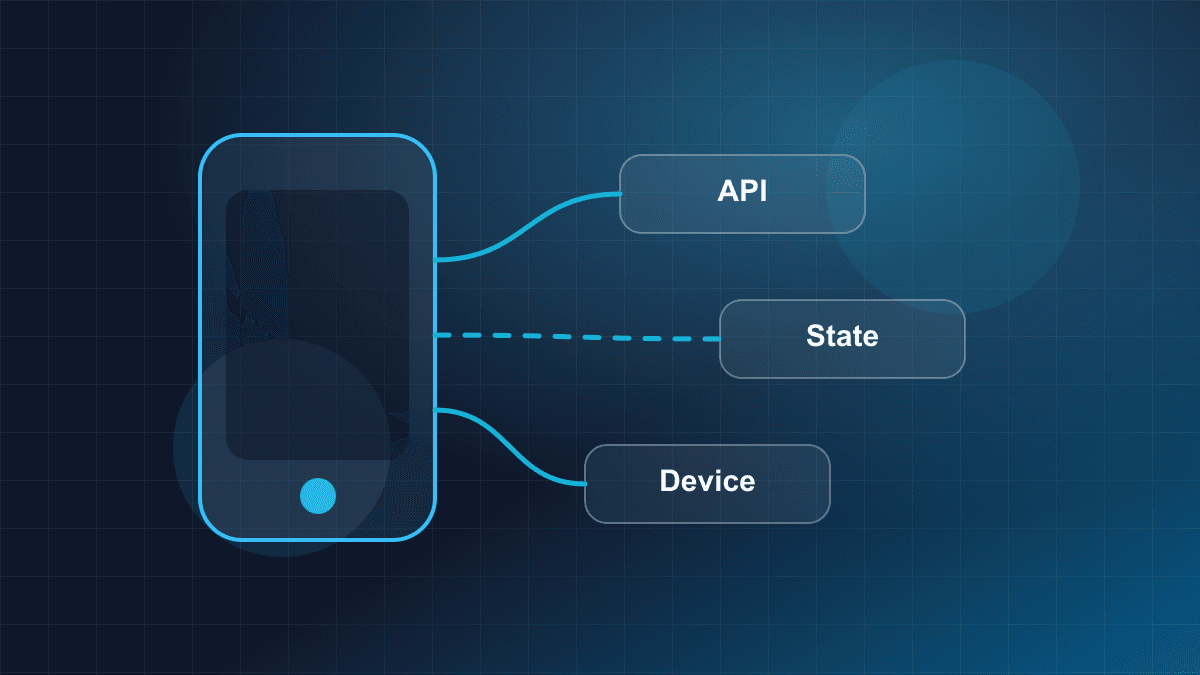
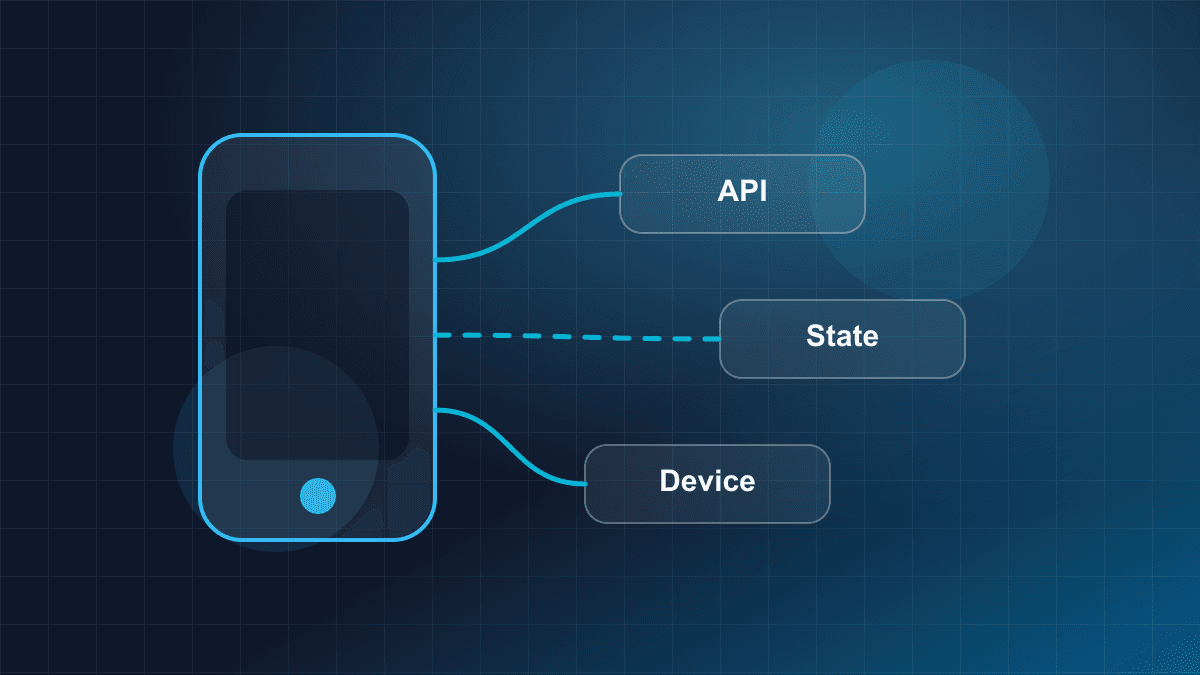
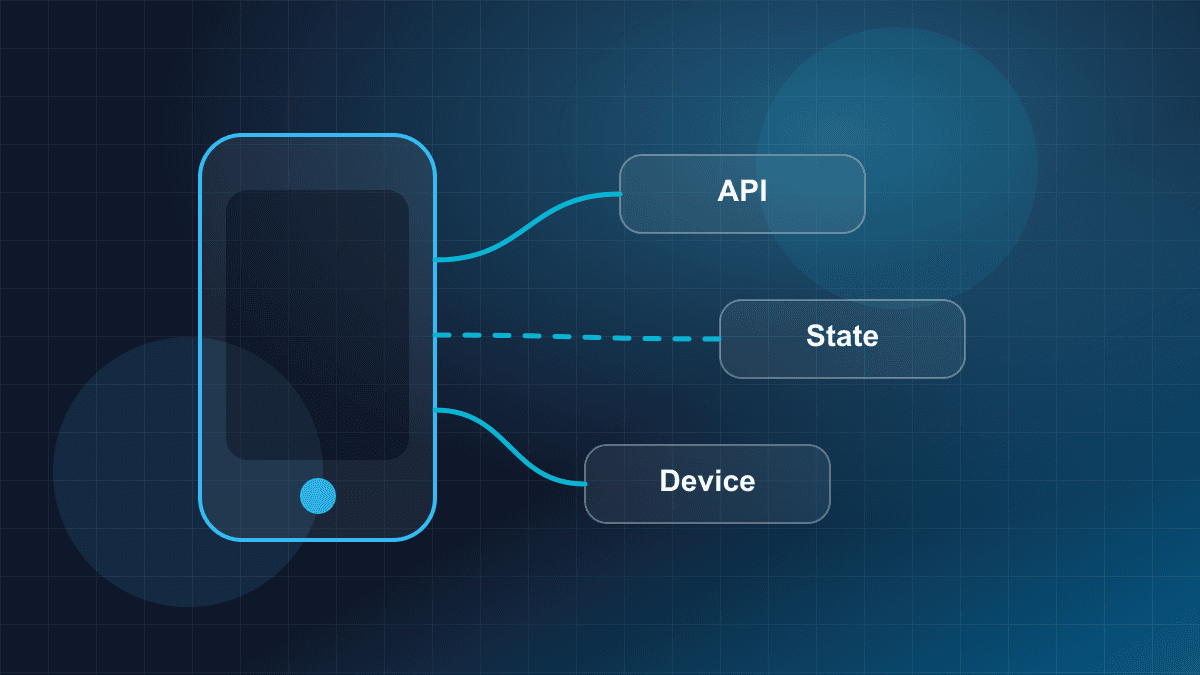
While this model is conceptually elegant, production mobile applications present state that is rarely uniform. An application must manage transient widget interactions (like text cursor positions or tab selections), cross-screen domain data (like shopping cart totals or user credentials), asynchronous server responses, and device-level states (such as offline network reachability).
The primary source of architecture decay in Flutter applications is treating all state with a single, indiscriminate hammer. Over-engineering a simple checkbox with an elaborate multi-file state machine adds unnecessary ceremony and friction. Conversely, relying on scattered, mutable global singletons leads to untraceable rebuild cascades, memory leaks, and broken test suites.
This guide provides an objective, production-focused evaluation of Flutter state management. We examine the core taxonomy of state, evaluate the three dominant architectural patterns in the modern Flutter ecosystem, highlight critical performance traps, and provide self-contained Dart 3 implementations designed for long-term maintainability.
1. The Core Taxonomy: Ephemeral State vs. App State
Before evaluating libraries or writing architecture boilerplate, teams must distinguish between two fundamentally different types of state: Ephemeral State and App State.
┌──────────────────────────────────────────────────────────────────┐
│                         FLUTTER RUNTIME                          │
├────────────────────────────────┬─────────────────────────────────┤
│        EPHEMERAL STATE         │            APP STATE            │
│       (Local / Widget)         │         (Shared / Domain)       │
├────────────────────────────────┼─────────────────────────────────┤
│ • PageView active index        │ • Authenticated User Session    │
│ • Text field input buffer      │ • E-Commerce Shopping Cart      │
│ • AnimationController ticker   │ • Localized Theme / Settings    │
│ • ExpansionTile collapsed flag │ • Remote API Data Cache         │
├────────────────────────────────┼─────────────────────────────────┤
│ Lifetime: Bound to Widget Node │ Lifetime: Bound to App Session  │
│ Tooling:  StatefulWidget,      │ Tooling:  ChangeNotifier,       │
│           ValueNotifier, Hooks │           Bloc/Cubit, Riverpod  │
│ Scope:    Single Widget Tree   │ Scope:    Multi-Screen / Domain │
└────────────────────────────────┴─────────────────────────────────┘
Ephemeral State (Local / Widget State)
Ephemeral state is state that lives and dies with a specific widget instance in the element tree. It is neither referenced by distant screens nor persisted across application cold starts.
Characteristics of ephemeral state:
- Strictly Localized: No other screen or feature needs to read or modify this data.
- Short Lifetime: When the user navigates away and the widget is unmounted from the element tree, the state is safely discarded.
- Direct Management: Managed cleanly with standard Flutter primitives like
StatefulWidgetandsetState(),ValueNotifierpaired withValueListenableBuilder, orHookWidgetfromflutter_hooks.
Attempting to hoist ephemeral state into global stores (such as storing a form field's temporary validation highlight inside a global BLoC) bloats the architecture and makes the widget dependent on external infrastructure it does not need.
App State (Shared / Domain State)
App state spans multiple navigation routes, manages business rules, coordinates asynchronous network requests, and survives individual widget unmounts.
Characteristics of app state:
- Cross-Cutting: Required by independent widgets across the hierarchy (e.g., an authenticated user profile needed in both the drawer navigation and the checkout screen).
- Business Logic Bound: Changes must follow validated domain rules rather than arbitrary UI mutations.
- Headless Testability: Must be verifiable through fast unit tests without inflating the Flutter widget tree or mounting mock render objects.
- Structured Propagation: Demands predictable ownership and explicit subscription scoping to avoid full-screen rebuilds.
Comparative Overview
| Dimension | Ephemeral State | App State |
| :--- | :--- | :--- |
| Primary Scope | Local widget sub-tree | Feature module or entire application |
| Typical Lifetime | Destroyed when widget unmounts | Persists across routes and sessions |
| Source of Truth | Widget State or ValueNotifier | Repository, Database, or Remote API |
| Recommended Tooling | setState(), ValueNotifier | ChangeNotifier, Bloc/Cubit, Riverpod |
| Business Logic Coupling | None (pure presentation) | High (enforces domain rules) |
| Testing Mechanism | Widget tests | Fast, headless unit tests |
2. Architectural Approaches Evaluated Objectively
The Flutter ecosystem has seen many state management libraries. Today, three primary patterns dominate production development: the framework-native ChangeNotifier + ListenableBuilder, the unidirectional Bloc / Cubit pattern, and the compile-time reactive Riverpod model.
1. Built-in ChangeNotifier + ListenableBuilder
ChangeNotifier is built directly into Flutter's foundation library (package:flutter/foundation.dart). When paired with ListenableBuilder (introduced into the framework in Flutter 3.10), it provides a lightweight, reactive state-holder pattern with zero third-party dependencies.
[User Action] ──► [ChangeNotifier Method] ──► Mutates Internal State
                                                      │
                                             notifyListeners()
                                                      │
                                                      ▼
                                           [ListenableBuilder]
                                                      │
                                            Rebuilds Scoped Leaf
How It Operates
A controller class extends or mixes in ChangeNotifier, encapsulates state variables, and calls notifyListeners() when a mutation completes. The widget tree listens to this controller using ListenableBuilder, which registers a listener on mount and unregisters it on disposal.
Strengths
- Zero External Dependencies: Built directly into the Flutter engine and framework.
- Low Ceremony: Intuitive for engineers familiar with traditional object-oriented observer patterns.
- Granular Rebuilding: When combined with
ListenableBuilder, rebuilds can be scoped strictly to the child widgets requiring updates.
Trade-offs & Caveats
- Mutable State by Default:
ChangeNotifiertypically relies on internal mutable variables. Uncontrolled mutations can occur without callingnotifyListeners(), causing silent UI desynchronization. - Manual Notification Discipline: The developer is entirely responsible for calling
notifyListeners(). Calling it too frequently triggers redundant build passes; forgetting it leaves the UI stale. - No Compiler-Enforced Exhaustiveness: Unless paired with custom sealed classes, state representations (idle, loading, error, success) are often represented as loose booleans or nullables.
2. BLoC (Business Logic Component) and Cubit (flutter_bloc)
Created by Felix Angelov, the BLoC pattern enforces strict Unidirectional Data Flow (UDF) inspired by reactive stream architectures. It provides two levels of abstraction: Cubit (function-to-state) and Bloc (event-to-state).
Cubit Flow:
[User Action] ──► [Cubit Method] ─────────────► emit(NewImmutableState)
                                                        │
                                                        ▼
                                                 [BlocBuilder]

Bloc Flow:
[User Action] ──► add(Event) ──► [Bloc Handler] ──► emit(NewImmutableState)
                                                        │
                                                        ▼
                                                 [BlocBuilder]
How It Operates
- Cubit: A subclass of
BlocBase<State>that exposes public functions. Inside these functions, new immutable state instances are emitted viaemit(). - Bloc: An event-driven state machine. UI widgets never call methods directly; they dispatch discrete event objects via
add(Event). The Bloc registers event handlers that process events asynchronously and emit resulting states.
Strengths
- Enforced Immutability & Predictability: States are immutable value objects. State transitions are deterministic and traceable.
- Centralized Observability: Using a global
BlocObserver, teams can log every event, state transition, and error across the entire application in a single location. - Headless Testability: Testing a Cubit or Bloc requires no Flutter runtime or widget mocks. You invoke a method or add an event, then assert the expected sequence of emitted states.
- Concurrency Management: Full BLoCs support custom event transformers (e.g.,
droppable(),restartable(),debounce()) via RxDart, preventing race conditions on rapid user interactions like search inputs.
Trade-offs & Caveats
- Boilerplate Ceremony: Full event-driven BLoC requires declaring Event classes, State classes, and Bloc registration handlers for every user interaction.
- Asynchronous Event Queue: Event handling in full BLoC relies on Dart
Streamdispatching, introducing micro-task asynchronous latency that is unnecessary for simple, synchronous state mutations.
3. Riverpod
Created by Remi Rousselet (the author of provider), Riverpod is a complete rewrite of the provider pattern designed to overcome the limitations of Flutter's InheritedWidget tree.
How It Operates
In Riverpod, providers are declared as top-level, globally accessible constants. Rather than looking up state through the BuildContext element hierarchy, widgets extend ConsumerWidget or use Consumer, receiving a WidgetRef object to explicitly read, watch, or listen to providers.
Strengths
- Compile-Time Safety: Completely eliminates
ProviderNotFoundException. If a provider is referenced in code, it exists and is valid at compile time. - Decoupled from
BuildContext: Providers can be read and combined outside the widget tree—in background isolates, repositories, or integration tests. - Granular Reactivity via
.select(): Widgets can subscribe to a single property of a complex state object (ref.watch(cartProvider.select((s) => s.itemCount))), ignoring mutations to other properties. - Automated Lifecycle Management: Providers support
.autoDisposeto automatically cancel network requests and release memory when no longer observed, and.familyto parameterize providers by ID.
Trade-offs & Caveats
- Steeper Learning Curve: Introduces a distinct domain-specific language (
Provider,NotifierProvider,AsyncNotifierProvider,StateNotifierProvider) and specialized widget base classes (ConsumerWidget,HookConsumerWidget). - Code Generation Reliance: Idiomatic modern Riverpod heavily encourages the use of
riverpod_generatorandbuild_runner, introducing code generation overhead to the build pipeline.
3. Architectural Comparison Matrix
The following matrix compares these approaches across production engineering criteria:
| Evaluation Criterion | ChangeNotifier + ListenableBuilder | BLoC / Cubit (flutter_bloc) | Riverpod (flutter_riverpod) |
| :--- | :--- | :--- | :--- |
| Package Dependency | Zero (Built into Flutter) | External (flutter_bloc) | External (flutter_riverpod) |
| State Immutability | Typically Mutable | Strictly Immutable | Strongly Encouraged / Immutable |
| Context Coupling | High (InheritedWidget or direct ref) | Medium (Tree-scoped via BlocProvider) | None (Decoupled via WidgetRef) |
| Compiler Exhaustiveness| Manual (unless using custom sealed types)| Compile-time via Dart 3 sealed states | Compile-time via AsyncValue / sealed states |
| Boilerplate Level | Low | Low (Cubit) to High (Bloc) | Low (with codegen) to Moderate |
| Concurrency Control | Manual (Completer / flags) | Built-in via event transformers | Built-in provider cancellation |
| Time-Travel / Logging | Manual logging | Built-in via BlocObserver | Built-in via ProviderObserver |
| Best-Fit Scenario | Small-to-medium apps, SDKs, design systems | Enterprise apps, strict UDF, audit logging | Complex reactive apps, heavy async caching |
4. Production Dart 3 Implementation Patterns
To evaluate these patterns concretely, consider an e-commerce shopping cart. The system must support asynchronous loading, adding items, calculating monetary totals, and handling error states.
Step 1: Defining Domain Models and Sealed State Hierarchy
Using Dart 3's sealed class feature, we model the cart's finite states. Sealed classes allow the Dart analyzer to enforce exhaustive type checking across all switch statements, guaranteeing that the UI never fails to handle an error or loading condition.
import 'package:flutter/foundation.dart';

/// Immutable domain model representing an item in the cart.
@immutable
class CartItem {
  final String id;
  final String title;
  final int priceInCents;
  final int quantity;

  const CartItem({
    required this.id,
    required this.title,
    required this.priceInCents,
    this.quantity = 1,
  });

  CartItem copyWith({int? quantity}) {
    return CartItem(
      id: id,
      title: title,
      priceInCents: priceInCents,
      quantity: quantity ?? this.quantity,
    );
  }

  @override
  bool operator ==(Object other) =>
      identical(this, other) ||
      other is CartItem &&
          runtimeType == other.runtimeType &&
          id == other.id &&
          quantity == other.quantity &&
          priceInCents == other.priceInCents;

  @override
  int get hashCode => Object.hash(id, quantity, priceInCents);
}

/// Abstract contract decoupling the data source from state controllers.
abstract interface class CartRepository {
  Future<List<CartItem>> loadCart();
  Future<List<CartItem>> addItem(CartItem item);
}

/// Dart 3 sealed state hierarchy guaranteeing compiler-enforced exhaustiveness.
sealed class CartState {
  const CartState();
}

final class CartInitial extends CartState {
  const CartInitial();
}

final class CartLoading extends CartState {
  const CartLoading();
}

final class CartLoaded extends CartState {
  final List<CartItem> items;
  final int totalInCents;

  const CartLoaded({
    required this.items,
    required this.totalInCents,
  });
}

final class CartError extends CartState {
  final String message;
  const CartError(this.message);
}
Step 2: Implementation A — Native ChangeNotifier + ListenableBuilder
Here, we implement the state controller using ChangeNotifier and demonstrate fine-grained rebuild scoping using Flutter's built-in ListenableBuilder.
import 'package:flutter/material.dart';

class CartNotifier extends ChangeNotifier {
  final CartRepository _repository;
  CartState _state = const CartInitial();

  CartNotifier(this._repository);

  CartState get state => _state;

  Future<void> fetchCart() async {
    _state = const CartLoading();
    notifyListeners();

    try {
      final items = await _repository.loadCart();
      _state = CartLoaded(
        items: List.unmodifiable(items),
        totalInCents: _calculateTotal(items),
      );
    } catch (e) {
      _state = CartError(e.toString());
    } finally {
      notifyListeners();
    }
  }

  Future<void> addItem(CartItem item) async {
    try {
      final updatedItems = await _repository.addItem(item);
      _state = CartLoaded(
        items: List.unmodifiable(updatedItems),
        totalInCents: _calculateTotal(updatedItems),
      );
      notifyListeners();
    } catch (e) {
      _state = CartError('Failed to add item: ${e.toString()}');
      notifyListeners();
    }
  }

  int _calculateTotal(List<CartItem> items) {
    return items.fold<int>(0, (sum, i) => sum + (i.priceInCents * i.quantity));
  }
}

/// A leaf widget demonstrating rebuild isolation using ListenableBuilder.
class CartBadgeView extends StatelessWidget {
  final CartNotifier notifier;

  const CartBadgeView({super.key, required this.notifier});

  @override
  Widget build(BuildContext context) {
    // Only this builder callback re-executes when notifier triggers notifyListeners().
    // The parent AppBar, navigation buttons, and surrounding screen do not rebuild.
    return ListenableBuilder(
      listenable: notifier,
      builder: (context, child) {
        return switch (notifier.state) {
          CartInitial() || CartLoading() => const SizedBox.shrink(),
          CartError() => const Icon(Icons.error_outline, color: Colors.red),
          CartLoaded(:final items) => Badge(
              label: Text('${items.length}'),
              child: const Icon(Icons.shopping_cart),
            ),
        };
      },
    );
  }
}
Step 3: Implementation B — Cubit (flutter_bloc) with Fine-Grained BlocBuilder
Now we implement the same requirement using a Cubit. Notice how state emissions are strictly immutable and how buildWhen provides explicit build gating.
import 'package:bloc/bloc.dart';
import 'package:flutter/material.dart';
import 'package:flutter_bloc/flutter_bloc.dart';

class CartCubit extends Cubit<CartState> {
  final CartRepository _repository;

  CartCubit(this._repository) : super(const CartInitial());

  Future<void> fetchCart() async {
    emit(const CartLoading());
    try {
      final items = await _repository.loadCart();
      emit(CartLoaded(
        items: List.unmodifiable(items),
        totalInCents: _calculateTotal(items),
      ));
    } catch (e) {
      emit(CartError(e.toString()));
    }
  }

  Future<void> addItem(CartItem item) async {
    try {
      final updatedItems = await _repository.addItem(item);
      emit(CartLoaded(
        items: List.unmodifiable(updatedItems),
        totalInCents: _calculateTotal(updatedItems),
      ));
    } catch (e) {
      emit(CartError('Failed to add item: ${e.toString()}'));
    }
  }

  int _calculateTotal(List<CartItem> items) {
    return items.fold<int>(0, (sum, i) => sum + (i.priceInCents * i.quantity));
  }
}

/// Screen demonstrating scoped rebuilding using BlocBuilder and buildWhen.
class CartTotalSummary extends StatelessWidget {
  const CartTotalSummary({super.key});

  @override
  Widget build(BuildContext context) {
    return BlocBuilder<CartCubit, CartState>(
      // Only rebuild this specific text view when the total amount changes.
      buildWhen: (previous, current) {
        if (previous is CartLoaded && current is CartLoaded) {
          return previous.totalInCents != current.totalInCents;
        }
        return previous.runtimeType != current.runtimeType;
      },
      builder: (context, state) {
        return switch (state) {
          CartInitial() => const Text('Ready to shop'),
          CartLoading() => const SizedBox(
              height: 16,
              width: 16,
              child: CircularProgressIndicator(strokeWidth: 2),
            ),
          CartError(:final message) => Text(
              'Error: $message',
              style: const TextStyle(color: Colors.red),
            ),
          CartLoaded(:final totalInCents) => Text(
              'Total: \$${(totalInCents / 100).toStringAsFixed(2)}',
              style: Theme.of(context).textTheme.titleLarge,
            ),
        };
      },
    );
  }
}
Step 4: Headless Unit Testing State Transitions
One of the strongest arguments for structured state management is the ability to verify business logic transitions headlessly. Because CartCubit does not reference BuildContext or Flutter widgets, tests execute in milliseconds without launching a simulator or rendering pipeline.
import 'package:flutter_test/flutter_test.dart';

/// Test fake simulating an asynchronous backend repository.
class FakeCartRepository implements CartRepository {
  final List<CartItem> _items = [];
  bool shouldFail = false;

  @override
  Future<List<CartItem>> loadCart() async {
    if (shouldFail) throw Exception('Network timeout');
    return List.unmodifiable(_items);
  }

  @override
  Future<List<CartItem>> addItem(CartItem item) async {
    if (shouldFail) throw Exception('Failed to persist item');
    _items.add(item);
    return List.unmodifiable(_items);
  }
}

void main() {
  group('CartCubit State Transitions', () {
    late FakeCartRepository repository;
    late CartCubit cartCubit;

    final testItem = const CartItem(
      id: 'item_101',
      title: 'Ergonomic Chair',
      priceInCents: 24900,
      quantity: 1,
    );

    setUp(() {
      repository = FakeCartRepository();
      cartCubit = CartCubit(repository);
    });

    tearDown(() {
      cartCubit.close();
    });

    test('initial state is CartInitial', () {
      expect(cartCubit.state, isA<CartInitial>());
    });

    test('fetchCart emits [CartLoading, CartLoaded] on successful fetch', () async {
      final expectedStates = [
        isA<CartLoading>(),
        isA<CartLoaded>().having((s) => s.items.length, 'items length', 0),
      ];

      expectLater(cartCubit.stream, emitsInOrder(expectedStates));
      await cartCubit.fetchCart();
    });

    test('addItem updates total amount correctly', () async {
      await cartCubit.addItem(testItem);

      expect(cartCubit.state, isA<CartLoaded>());
      final loadedState = cartCubit.state as CartLoaded;
      expect(loadedState.totalInCents, equals(24900));
      expect(loadedState.items.first.title, equals('Ergonomic Chair'));
    });

    test('emits CartError when repository throws an exception', () async {
      repository.shouldFail = true;

      final expectedStates = [
        isA<CartLoading>(),
        isA<CartError>().having(
          (s) => s.message,
          'message',
          contains('Network timeout'),
        ),
      ];

      expectLater(cartCubit.stream, emitsInOrder(expectedStates));
      await cartCubit.fetchCart();
    });
  });
}
5. Critical Anti-Patterns & Performance Traps
Regardless of whether a team chooses ChangeNotifier, Bloc, or Riverpod, common implementation anti-patterns degrade performance and cause subtle runtime bugs.
ANTI-PATTERN: Rebuilding the World
[Screen Root: context.watch<CartNotifier>()]  ◄── Triggers full screen rebuild!
       │
       ├──► [AppBar Header]                  (Unnecessarily rebuilt)
       ├──► [Static Marketing Banner]        (Unnecessarily rebuilt)
       ├──► [Complex Product GridView]       (Unnecessarily rebuilt)
       └──► [CartBadge (Needs update)]        (Target update)

RECOMMENDED: Scoped Leaf Subscription
[Screen Root]
       │
       ├──► [AppBar Header]                  (Untouched)
       ├──► [Static Marketing Banner]        (Untouched)
       ├──► [Complex Product GridView]       (Untouched)
       └──► [ListenableBuilder / BlocBuilder] ◄── Scoped rebuild strictly here!
                   │
                   └──► [CartBadge Text]
1. "Rebuilding the World" (High Widget Tree Subscription)
When a developer subscribes to state at the top of a screen widget (e.g., calling context.watch<CartNotifier>() inside the build() method of a Scaffold), any mutation to the cart marks the root Element dirty.
During the next frame layout pass, Flutter is forced to recursively call build() on every child widget down the hierarchy—including static banners, complex lists, and layout containers that have no dependency on the cart.
The Fix
Push state subscriptions down to the leaf nodes. Use ListenableBuilder, BlocBuilder, or Consumer specifically around the smallest sub-tree that actually renders the dynamic data. Keep screen-level scaffolding static and const.
2. State In-Place Mutation (The Reference Equality Trap)
Dart collections (List, Map, Set) are reference types. A frequent bug in state management occurs when a controller modifies an existing collection in place and emits or notifies listeners with the same instance reference:
// ❌ CRITICAL BUG: In-place mutation breaks equality comparison
void addItemBuggy(CartItem item) {
  _items.add(item); // Mutating the existing list in memory
  emit(CartLoaded(items: _items, totalInCents: _calculateTotal()));
}
Because _items references the exact same memory address on the heap, equality checks like identical(oldState.items, newState.items) evaluate to true. Many state listeners and builders (including BlocBuilder with default equality) determine that state has not changed and skip re-rendering, leaving the user interface stale.
The Fix
Always create new, unmodifiable collection instances when emitting state:
// ✅ CORRECT: Create a new collection reference
void addItemCorrect(CartItem item) {
  final newItems = List<CartItem>.unmodifiable([...state.items, item]);
  emit(CartLoaded(items: newItems, totalInCents: _calculateTotal(newItems)));
}
3. Jamming Business Logic into State Classes
State controllers (Notifiers, Cubits, Presenters) should orchestrate state and map domain outcomes to UI view states. They should not contain raw networking, database queries, or serialization logic:
// ❌ ANTI-PATTERN: State class coupled directly to HTTP sockets
class BadCartNotifier extends ChangeNotifier {
  Future<void> checkout() async {
    final response = await http.post(
      Uri.parse('https://api.example.com/checkout'),
      headers: {'Authorization': 'Bearer $token'},
    );
    // Parsing JSON directly inside the state holder...
  }
}
This violates separation of concerns. You cannot write a unit test for checkout() without setting up a real HTTP server or complex socket mocks.
The Fix
Inject a domain repository (CartRepository) that encapsulates remote calls and data formatting. The state controller coordinates operations by invoking repository contracts, allowing fast, isolated testing.
4. Calling context.watch() inside Event Callbacks
BuildContext.watch<T>() establishes an active dependency between the calling widget and the inherited model during the build phase.
Calling context.watch() inside an imperative event handler (such as an onPressed callback of an ElevatedButton) is invalid:
// ❌ RUNTIME ERROR: Calling watch inside an event callback
ElevatedButton(
  onPressed: () {
    // Throws FlutterError: context.watch can only be called inside build()!
    context.watch<CartCubit>().addItem(item);
  },
  child: const Text('Add to Cart'),
);

// ✅ CORRECT: Use context.read inside event callbacks
ElevatedButton(
  onPressed: () {
    context.read<CartCubit>().addItem(item);
  },
  child: const Text('Add to Cart'),
);
In event callbacks, use context.read<T>() or ref.read(). It retrieves the controller instance imperatively without subscribing the button widget to ongoing rebuilds.
6. Architectural Decision Framework
When choosing a state management approach for a new application or feature module, evaluate these four operational questions:
                                 [New Flutter Feature]
                                           │
                        Is state strictly local to one widget?
                                     /           \
                                  YES             NO
                                  /                 \
                  [Use StatefulWidget /          Is this an SDK, Design System,
                   ValueNotifier / Hooks]        or Small Application?
                                                      /             \
                                                   YES               NO
                                                   /                   \
                                   [ChangeNotifier +         Does the team prioritize
                                   ListenableBuilder]        strict UDF & audit logging?
                                                                 /            \
                                                              YES              NO
                                                              /                  \
                                                        [BLoC / Cubit]        [Riverpod]
Decision Criteria
- Team Scale and Uniformity:
- For teams of five or more mobile engineers working simultaneously across multiple feature repositories, BLoC / Cubit provides the most rigid architectural guardrails. The convention of Events, States, and
BlocObserverprevents rogue development patterns and makes PR reviews predictable.
- For teams of five or more mobile engineers working simultaneously across multiple feature repositories, BLoC / Cubit provides the most rigid architectural guardrails. The convention of Events, States, and
- Reactivity and Async Caching Needs:
- Applications with heavy asynchronous interdependencies (e.g., search with debounce, multi-layer caching, automatic session invalidation) benefit significantly from Riverpod's computed providers and
AsyncValuecaching primitives.
- Applications with heavy asynchronous interdependencies (e.g., search with debounce, multi-layer caching, automatic session invalidation) benefit significantly from Riverpod's computed providers and
- Third-Party Package Constraints & SDKs:
- If developing an open-source Flutter package, white-label plugin, or lightweight internal SDK, avoid imposing third-party dependencies on downstream consumers. Use the framework-native
ChangeNotifier+ListenableBuilderorValueNotifier.
- If developing an open-source Flutter package, white-label plugin, or lightweight internal SDK, avoid imposing third-party dependencies on downstream consumers. Use the framework-native
7. Production State Management Verification Checklist
Before approving a pull request or deploying a state-heavy feature to production, verify each item on this checklist:
- [ ] State Taxonomy Audit: Verify that transient widget UI state (e.g., text controllers, tab indices, dialog toggles) is kept local with
StatefulWidgetorValueNotifier, and not leaked into global domain controllers. - [ ] Rebuild Scope Containment: Confirm that
context.watch()or top-level provider subscriptions are not placed at the rootScaffoldlevel. Rebuild scopes should be restricted to leaf nodes viaListenableBuilder,BlocBuilder, orConsumer. - [ ] Immutability Verification: Ensure all collection updates (
List,Map,Set) emit fresh, unmodifiable copies rather than mutating collections in place. - [ ] Callback Hygiene: Verify that all button tap handlers, gesture detectors, and lifecycle callbacks use
context.read()orref.read(), nevercontext.watch(). - [ ] Resource Disposal: Ensure all manually instantiated
ChangeNotifier,ValueNotifier,StreamSubscription, andBlocinstances implementdispose()orclose()in their owning widget or dependency container. - [ ] Repository Isolation: Confirm that state classes do not directly import
dart:io,package:http, or database clients. All data fetching must be delegated through injected repository interfaces. - [ ] Headless Unit Test Coverage: Ensure core state transitions (Initial Loading Success/Error) are covered by headless unit tests without inflating a Flutter widget tree.
- [ ] DevTools Profiler Check: Validate in Flutter DevTools Performance view that interacting with the feature does not cause unnecessary rebuilds in parent layout widgets.
8. Conclusion: Architecture Over Dogma
In mobile engineering, there is no universally superior state management tool. The strongest architecture is the one that fits your team's size, minimizes cognitive friction, and enforces clear separation between visual presentation and business logic.
Start by respecting the boundary between ephemeral UI state and durable app state. Keep simple things simple with Flutter's native primitives. When cross-screen complexity, asynchronous data coordination, and strict domain rules emerge, adopt structured, testable patterns like BLoC, Cubit, or Riverpod.
By focusing on immutability, fine-grained rebuild containment, and headless testability, your application will remain performant, resilient, and easy to maintain as requirements grow.