Building Production Apps Beyond the First Release
A production app needs release planning, observability, support paths, and technical choices that keep the product operable after launch.
Building Production Apps Beyond the First Release
A mobile application is not finished when its first version reaches the App Store or Google Play.
That release is an important milestone, but production introduces a different set of engineering requirements. Once real users depend on an application, the team has to deal with crashes, authentication failures, changing APIs, outdated versions, interrupted payments, notification delivery, configuration mistakes, support requests, analytics, privacy expectations, and the simple reality that not every user will be running the newest version.
A prototype can succeed by proving that an idea works.
A production application has to prove that the idea can continue working.
That distinction changes how a mobile product should be designed.
The most reliable teams do not treat release preparation as a final checklist performed immediately before submission. They think about operability while features are being designed and implemented.
This article looks at the engineering practices that help a mobile application survive beyond its first release: release planning, version compatibility, configuration, authentication, data migration, observability, crash handling, analytics, payments, notifications, support, security, testing, deployment, rollback strategies, and long-term maintenance.
Launch Is a System, Not an Event
A store submission is an event.
Production operation is a system.
Before launch, a team can often control almost every part of the environment. Developers know which build is being tested, which backend is running, which test accounts exist, and which devices are being used.
After launch, that control disappears.
Users may:
- remain on older app versions
- have incomplete data
- lose network connectivity
- deny permissions
- switch devices
- use unusual screen sizes
- trigger unexpected sequences of actions
- encounter third-party service failures
- submit malformed or unexpected input
The application therefore needs to be designed for a world where conditions are not perfectly controlled.
A useful production mindset is:
Feature
   ↓
Release
   ↓
Observe
   ↓
Support
   ↓
Fix
   ↓
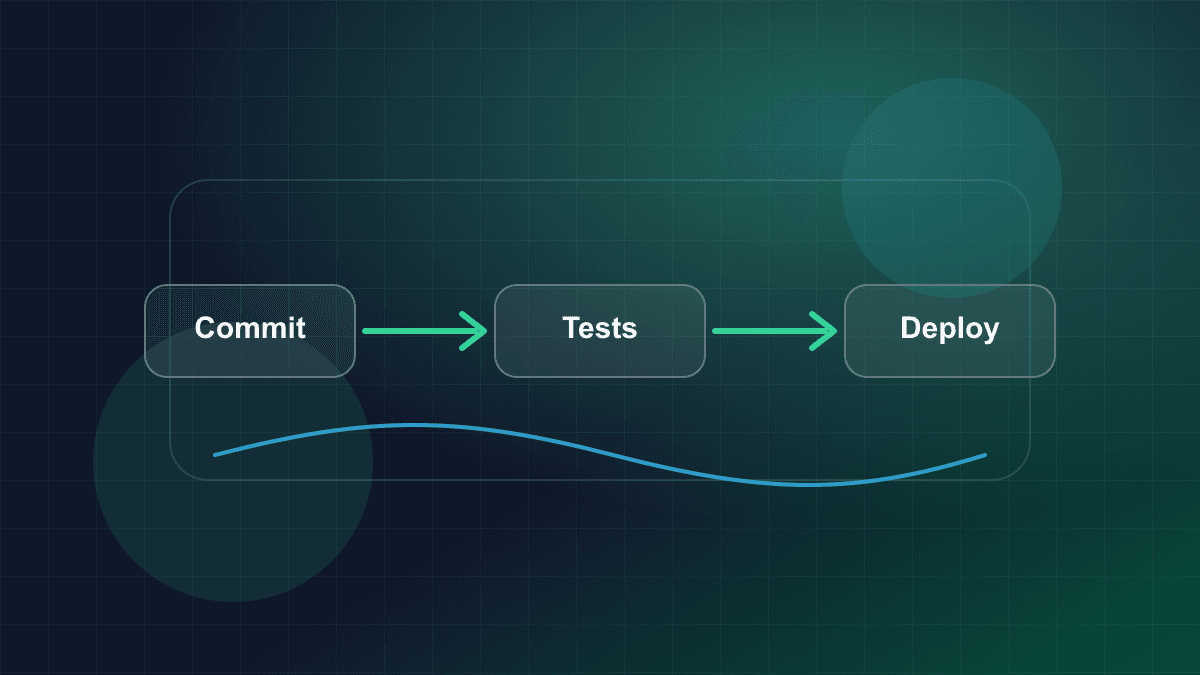
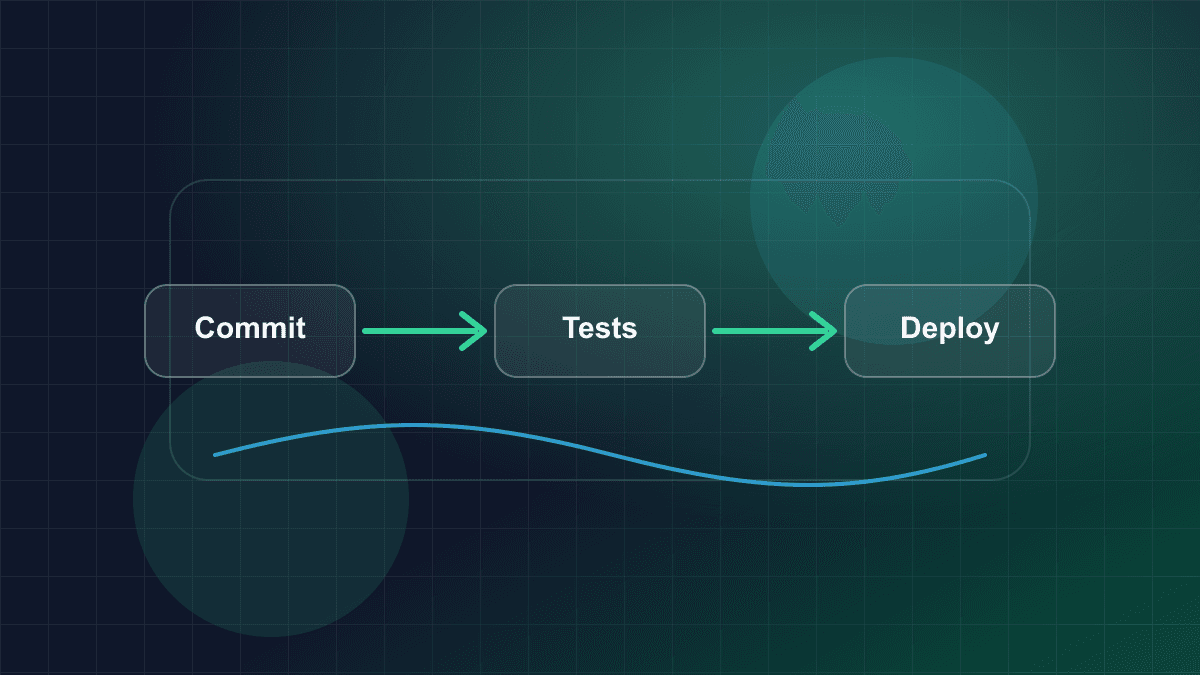
Release again
The first release is simply the beginning of this cycle.
Production Readiness Starts During Product Design
Many operational problems originate before development begins.
Suppose a product requirement says:
"Users should receive notifications about important account events."
That sounds like a single feature.
In reality, it raises several engineering questions:
- Which events trigger notifications?
- Are notifications mandatory or configurable?
- What happens if permission is denied?
- Where are notification preferences stored?
- Can a user have multiple devices?
- What happens when a token changes?
- Can the notification open a specific screen?
- What happens if delivery fails?
- Should duplicate events produce duplicate notifications?
- Can support staff resend an important notification?
- What happens when an old application version receives the notification?
The same pattern applies to:
- payments
- authentication
- subscriptions
- file uploads
- account deletion
- content publishing
- deep links
- background synchronization
A feature is rarely just its visible screen.
Production engineering begins when the team considers the complete lifecycle of the feature.
Define What Must Work Before Launch
Not every part of an application needs the same level of readiness.
A useful approach is to classify functionality.
Critical functionality
Examples include:
- authentication
- payments
- account creation
- core transactions
- data persistence
- security-sensitive operations
A failure in these areas can prevent users from completing the product's primary purpose.
Important functionality
Examples include:
- search
- notifications
- secondary dashboards
- content synchronization
- reporting
These should be reliable, but their failure may not make the entire product unusable.
Optional functionality
Examples include:
- secondary personalization
- advanced filters
- non-essential recommendations
- cosmetic features
These can sometimes degrade gracefully.
This classification helps teams prioritize testing, monitoring, and fallback behavior.
A production application does not need every component to have identical failure handling.
It needs the most important user journeys to have the strongest protection.
Release Planning
A release should answer several practical questions.
What exactly is being released?
The team should know:
- application version
- build number
- backend compatibility
- database changes
- feature flags
- configuration changes
- known limitations
What changes are required outside the app?
For example:
Mobile release
    ↓
Requires backend endpoint
    ↓
Requires database migration
    ↓
Requires new configuration
If these dependencies are not coordinated, users can receive an application that expects infrastructure that is not ready.
What happens if the release fails?
A release plan should define what can be:
- rolled back
- disabled
- fixed in a follow-up release
- handled through backend configuration
The more of these decisions are made before the incident, the less chaotic the incident becomes.
Versioning Is Part of System Design
Mobile applications remain installed after a new release becomes available.
That means multiple versions of the application can exist in the real world simultaneously.
Consider:
v1.0 users
v1.1 users
v1.2 users
v2.0 users
All of them may communicate with the same backend.
This creates an important requirement:
The backend must understand which clients it is serving.
A backend change that works perfectly with the latest application can still break users who have not upgraded.
Backward Compatibility
Suppose version 2 of an API changes:
{
  "displayName": "Asha"
}
while an older application expects:
{
  "name": "Asha"
}
If the backend simply removes name, old clients may fail.
Production systems therefore need a strategy for API evolution.
Possible approaches include:
- additive changes
- versioned endpoints
- compatibility fields
- feature negotiation
- controlled deprecation
- minimum supported app versions
The appropriate strategy depends on the product.
The important point is that mobile clients cannot be treated like a server that is upgraded instantly.
Users control when they install an update.
Additive Changes Are Often Safer
When possible, adding new information without removing existing information can reduce compatibility risk.
For example:
{
  "name": "Asha",
  "displayName": "Asha Sharma"
}
can temporarily support both old and new clients.
After the minimum supported version has moved forward, the old field can eventually be removed according to the application's deprecation policy.
This may appear inefficient compared with making a clean breaking change immediately.
For a mobile product, however, temporary compatibility can be significantly safer than forcing every user to upgrade at exactly the same moment.
Minimum Supported Versions
At some point, supporting every historical application version becomes impractical.
A product can define a minimum supported version.
The application can then determine:
Current version
      ↓
Below minimum?
   /       \
 yes       no
 ↓          ↓
Update    Continue
required
The update experience should be handled carefully.
A forced upgrade may be justified for:
- critical security fixes
- incompatible backend changes
- legal requirements
- severe reliability problems
For less critical changes, a softer update prompt may be better.
The goal is to balance operational safety with user experience.
Database Migrations Need a Plan
Local data is another compatibility boundary.
Applications commonly store:
- authentication information
- cached content
- preferences
- offline records
- drafts
- local indexes
- application state
When the schema changes, existing installations still contain the old schema.
A migration therefore needs to handle:
Old schema
    ↓
Migration
    ↓
New schema
Migration logic should be:
- deterministic
- tested
- safe for partially populated data
- compatible with realistic upgrade paths
Testing only a fresh installation is not enough.
An application can work perfectly when installed from scratch and still fail when upgraded from an older version containing years of accumulated data.
Test Upgrades, Not Only Fresh Installs
A production release should be tested in at least two broad scenarios:
Fresh installation
and:
Existing installation
      ↓
Upgrade
      ↓
Continue using existing data
The second scenario often reveals problems that the first cannot.
Examples include:
- schema migrations
- stale cached data
- old authentication state
- changed serialization
- removed configuration
- deprecated preferences
- old feature state
Upgrade testing becomes particularly important when the application stores meaningful offline or local data.
Configuration Should Be Deliberate
Mobile applications usually depend on configuration such as:
- API endpoints
- environment identifiers
- feature flags
- analytics settings
- third-party service configuration
Production configuration should not be treated as an afterthought.
A common environment model might include:
Development
    ↓
Testing / Staging
    ↓
Production
The important requirement is that configuration is explicit and predictable.
A production build should never accidentally point to a development API.
Similarly, a test build should not accidentally send real production events or transactions.
Secrets Are Not the Same as Configuration
A common misconception is that secrets can be made safe simply by hiding them inside a mobile application.
They cannot.
Anything shipped to a client device should generally be treated as potentially recoverable by someone with sufficient access to the application.
Mobile applications can contain public configuration, but sensitive credentials should remain on trusted server-side infrastructure whenever possible.
For example, a backend should normally hold:
- private API credentials
- signing secrets
- database credentials
- payment-provider secrets
- privileged service credentials
The mobile client should receive only what it genuinely needs.
This is both a security and an architecture concern.
Feature Flags Can Reduce Release Risk
Feature flags allow functionality to be controlled independently from the application binary.
A simple model is:
Application
     ↓
Feature flag
   /       \
off         on
This can be useful when:
- releasing gradually
- testing a feature with a small audience
- disabling a problematic feature
- separating deployment from activation
- coordinating backend and mobile changes
Feature flags should still be treated as production infrastructure.
A growing collection of poorly managed flags can become difficult to understand.
Every flag should ideally have:
- an owner
- a purpose
- a default state
- a lifecycle
- a removal plan
A temporary release mechanism should not quietly become permanent architecture.
Observability Is Part of Production Readiness
A production application should provide enough information for the team to understand what is happening without requiring every user to reproduce a problem manually.
Observability generally includes:
- crash reporting
- error reporting
- logs
- performance measurements
- analytics
- operational metrics
The goal is not to collect everything.
The goal is to collect enough information to answer useful questions.
For example:
Did this release increase crash frequency?
Which screen is failing?
Which application versions are affected?
Is the problem limited to one device family?
Did an API change increase request failures?
Without observability, production debugging becomes guesswork.
Crash Reporting
Crash reporting is one of the highest-value operational capabilities for a mobile application.
A crash report should ideally help identify:
- application version
- build number
- operating-system version
- device information
- relevant stack trace
- frequency
- affected users
The exact information depends on the reporting system and privacy requirements.
The important point is that a crash should become actionable information.
A crash rate of:
0.5%
means something very different from:
0.005%
but even the raw percentage is not enough.
The team also needs to know:
- which crashes are responsible
- how many users are affected
- whether the problem appeared after a release
- whether the crash blocks a critical workflow
Error Handling Should Be Intentional
Not every failure should crash the application.
Production applications should distinguish between recoverable and unrecoverable situations.
For example:
Network unavailable
      ↓
Show recoverable state
      ↓
Retry
is very different from:
Application invariant violated
      ↓
Record diagnostic information
      ↓
Prevent unsafe continuation
The UI should provide an understandable response where recovery is possible.
For example:
Unable to load your transactions. Check your connection and try again.
is more useful than exposing an internal exception.
Logging Requires Discipline
Logs are useful for debugging but can create problems if they contain too much information.
Avoid logging sensitive data such as:
- passwords
- authentication tokens
- payment credentials
- private user content
- unnecessary personal information
Logs should also have appropriate severity.
A production system may distinguish between:
debug
info
warning
error
critical
The exact levels depend on the tooling.
The purpose is to make important events easier to identify without creating an overwhelming stream of noise.
Analytics Should Answer Product Questions
Analytics are valuable when they help the team make decisions.
Poor analytics often look like:
screen_opened
button_clicked
button_clicked_2
button_clicked_again
with no clear reason for collecting the events.
Useful analytics answer questions such as:
- Where do users abandon onboarding?
- Which feature is actually being used?
- How often does a critical workflow fail?
- Which version introduced a drop in conversion?
- How long does a common workflow take?
Analytics should therefore be designed around product questions.
Before adding an event, ask:
What decision will this data help us make?
If there is no good answer, the event may not be necessary.
Analytics and Privacy
Production analytics must also respect privacy requirements.
The application should collect only information that is justified by the product's needs and applicable requirements.
Teams should understand:
- what data is collected
- why it is collected
- where it is sent
- how long it is retained
- who can access it
- whether users need to be informed or given choices
More analytics does not automatically mean better analytics.
Useful, minimal, well-understood data is usually more valuable than a massive event stream nobody can interpret.
Payments Need Failure Paths
Payment functionality deserves special treatment because the happy path is only one part of the workflow.
A payment can:
- succeed
- fail
- be cancelled
- remain pending
- succeed while the client loses connectivity
- be retried
- be duplicated accidentally
- require server-side verification
The client should not assume:
Button tapped
    ↓
Payment API returned
    ↓
Order definitely completed
Production payment systems generally need server-side verification and an explicit state model.
For example:
Payment initiated
       ↓
Pending
   /       \
Success    Failure
   ↓
Fulfilled
The exact states depend on the payment provider and product.
The important point is that payment is a distributed workflow.
The mobile screen is only one participant.
Idempotency Matters in Critical Operations
Suppose a user taps a payment or order button twice because the first tap appears not to respond.
If the backend treats both requests as separate operations, the result can be a duplicate transaction.
For important operations, systems should consider idempotency.
Conceptually:
Request
+ unique operation identifier
        ↓
Server
        ↓
Already processed?
   /          \
 yes           no
 ↓              ↓
return       process
existing
result
The exact implementation depends on the backend and operation.
The principle is broader than payments.
Idempotency can be valuable for:
- order creation
- account operations
- uploads
- webhook processing
- synchronization
- other retryable commands
Mobile networks are unreliable enough that retry behavior should be expected rather than treated as an unusual event.
Notifications Are a Distributed System
Push notifications appear simple from the user's perspective.
The engineering system behind them may include:
Application event
      ↓
Backend
      ↓
Notification service
      ↓
Device token
      ↓
Operating system
      ↓
Application
      ↓
Deep link / screen
Failures can occur at multiple points.
A production notification system therefore needs to consider:
- token lifecycle
- permission state
- multiple devices
- duplicate delivery
- expired tokens
- user preferences
- notification content
- deep links
- application versions
Notifications should be treated as a system rather than merely a UI feature.
Deep Links Need Fallback Behavior
Suppose a notification opens:
/orders/123
What happens if:
- the user is logged out?
- the order no longer exists?
- the app version does not support that route?
- the user does not have permission to view the order?
- the application is not installed?
A production deep-link flow needs defined behavior for these cases.
The happy path is:
Notification
    ↓
Open application
    ↓
Authenticate
    ↓
Open order
But production also needs paths such as:
Not authenticated
    ↓
Login
    ↓
Return to intended destination
and:
Resource unavailable
    ↓
Show appropriate fallback
Support Is Part of the Product
A production application eventually produces support questions.
Users may report:
- login problems
- missing content
- payment issues
- unexpected behavior
- account problems
- notification failures
A support process should provide enough information for the team to investigate without repeatedly asking the user to explain the entire situation.
Useful context may include:
- application version
- relevant feature
- approximate time
- operation identifier where appropriate
- non-sensitive diagnostic information
Support should not require access to unnecessary personal information.
The goal is to connect:
User report
     ↓
Application context
     ↓
Diagnostic information
     ↓
Engineering investigation
That connection dramatically reduces resolution time.
Build a Clear Incident Path
When something important breaks, the team should know:
- How the problem is detected.
- Who investigates it.
- How severity is determined.
- Whether a feature can be disabled.
- Whether a backend rollback is possible.
- Whether a mobile release is required.
- How users are informed when appropriate.
This does not require a huge corporate incident-management process.
Even a small team benefits from having a documented response path.
The worst time to invent an incident process is during the incident.
Graceful Degradation
Not every external dependency will always be available.
Suppose a recommendation service fails.
Does the entire application stop working?
It may not need to.
A resilient application can sometimes degrade:
Recommendation service unavailable
          ↓
Hide recommendations
          ↓
Core application continues
Likewise:
Analytics unavailable
       ↓
Do not block user workflow
       ↓
Application continues
The correct fallback depends on whether the dependency is essential.
A useful design question is:
If this service becomes unavailable for thirty minutes, what is the minimum functionality users should still have?
That question exposes hidden dependencies early.
Testing Production Failure Modes
Most development testing focuses on successful flows.
Production readiness requires testing failures too.
Important scenarios can include:
- no network
- slow network
- server timeout
- expired authentication
- malformed response
- empty response
- permission denied
- storage failure
- payment cancellation
- notification permission denied
- interrupted upload
- application upgrade
- stale cached data
A failure should produce a defined state rather than an accidental one.
For example:
API timeout
    ↓
Loading state
    ↓
Timeout detected
    ↓
Error state
    ↓
Retry
The exact UI will vary, but the state transition should be deliberate.
Test the Upgrade Path
Release testing should include:
Old version
    ↓
Install new version
    ↓
Migrate local data
    ↓
Authenticate if necessary
    ↓
Continue existing workflow
This is particularly important when:
- the local schema changes
- authentication changes
- API contracts change
- cached data structures change
- feature flags are introduced
- subscriptions or entitlements change
A fresh installation tests only one state of the world.
An existing user is often in a much more complicated state.
Release Channels Can Reduce Risk
Depending on the product and distribution model, releases can be staged.
A typical progression might be:
Internal testing
      ↓
Small external group
      ↓
Limited production rollout
      ↓
Broader rollout
      ↓
Full release
The purpose is not to delay releases unnecessarily.
It is to reduce the number of users exposed to an unknown problem.
If monitoring reveals a serious regression during an early rollout, the team can investigate before the entire user base is affected.
The exact rollout capabilities depend on the distribution platforms and product requirements.
Backend Changes Should Be Coordinated With Mobile Releases
A mobile release can be blocked by backend timing.
Suppose version 2 expects:
/api/v2/profile
but the backend does not deploy that endpoint until after users receive version 2.
The application may fail immediately after release.
A safer sequence can be:
Deploy backward-compatible backend
       ↓
Verify backend
       ↓
Release mobile application
       ↓
Increase adoption
       ↓
Remove old backend behavior later
This is sometimes called compatibility-first deployment.
It is particularly useful when multiple mobile versions can coexist.
Database Changes Need Similar Coordination
Database migrations can affect both backend and mobile systems.
A safer approach is often to make schema changes compatible with both the old and new application behavior before removing old fields or structures.
For example:
Phase 1
Add new field

Phase 2
Deploy code that can use new field

Phase 3
Migrate data

Phase 4
Remove old field after compatibility window
The exact migration strategy depends on the system.
The important principle is to avoid making an irreversible change before all relevant clients are ready for it.
Security Is Part of Production Quality
Production readiness includes security fundamentals.
Mobile applications should consider:
- secure authentication
- protected transport
- secure local storage for sensitive information
- session expiration
- authorization enforcement
- input validation
- dependency updates
- certificate and key management
- logging hygiene
One especially important distinction is authentication versus authorization.
Authentication answers:
Who is this user?
Authorization answers:
Is this user allowed to perform this operation?
The backend should enforce authorization.
The mobile client can hide unavailable UI, but hiding a button is not a security boundary.
A malicious or modified client can attempt requests directly.
Do Not Trust Client-Side State for Security
Suppose the application stores:
isPremium = true
locally.
That value can be useful for presentation.
It should not be treated as proof that the user has premium privileges.
Sensitive decisions should be validated by trusted backend systems.
The client can optimize the experience.
The server should enforce authorization where the operation requires trust.
This distinction is fundamental to production mobile architecture.
Dependency Updates Are Maintenance Work
A production application depends on more than its own source code.
It also depends on:
- Flutter
- Dart
- packages
- platform SDKs
- native libraries
- third-party services
Those dependencies evolve.
Ignoring updates indefinitely can lead to:
- security vulnerabilities
- compatibility problems
- build failures
- deprecated APIs
- unsupported platform versions
At the same time, updating everything immediately without testing can introduce regressions.
A disciplined maintenance process should include:
Review updates
     ↓
Assess impact
     ↓
Update
     ↓
Run tests
     ↓
Profile important flows
     ↓
Release safely
Dependency maintenance is part of production ownership.
Documentation Should Explain Operational Decisions
Documentation is most useful when it helps another developer operate or change the system safely.
Useful production documentation can explain:
- environment setup
- release process
- backend dependencies
- configuration
- feature flags
- database migrations
- important third-party integrations
- incident procedures
- known limitations
- rollback procedures
The goal is not to document every line of code.
The goal is to preserve information that would otherwise exist only in someone's memory.
Handover Is Part of Delivery
A production application should not become understandable only to the person who originally built it.
A good handover should make it possible for another developer to answer:
- How do I build the application?
- Which environments exist?
- Where does configuration live?
- How is a release created?
- What services does the application depend on?
- How do I investigate crashes?
- How are database migrations handled?
- How do I disable a feature?
- What should I do if the backend changes?
This reduces operational dependence on individuals.
It also makes future development faster.
Production Quality Is a Lifecycle
It is useful to think of production engineering as a loop:
Plan
 ↓
Build
 ↓
Test
 ↓
Release
 ↓
Observe
 ↓
Support
 ↓
Improve
 ↓
Release again
Every stage provides information for the next one.
A crash report can influence architecture.
A support ticket can reveal a confusing workflow.
Analytics can show that a feature is rarely used.
A performance trace can expose an inefficient data path.
A failed release can improve deployment procedures.
Production therefore becomes part of the development feedback loop.
A Practical Production Readiness Checklist
Before a significant mobile release, review the following.
Application
- Are critical user journeys tested?
- Are loading, empty, and error states defined?
- Are permissions handled?
- Are upgrade paths tested?
- Is local data migration safe?
Backend compatibility
- Can supported mobile versions continue working?
- Are breaking API changes coordinated?
- Are new endpoints deployed before dependent clients?
- Is deprecated behavior removed only after the compatibility window?
Reliability
- Is crash reporting active?
- Are important errors observable?
- Can critical failures be reproduced from diagnostic information?
- Are external dependency failures handled?
Payments
- Are payment states explicit?
- Is server-side verification used?
- Are retries safe?
- Can duplicate operations be prevented?
Notifications
- Are device tokens handled correctly?
- Are permission states considered?
- Are deep links tested?
- Are logged-out and unsupported-version cases handled?
Security
- Are secrets kept off the client?
- Is authorization enforced server-side?
- Is sensitive data excluded from logs?
- Are authentication states handled safely?
Release
- Is the version identified clearly?
- Are build and release steps documented?
- Can a problematic feature be disabled?
- Is staged rollout available where appropriate?
- Is there a rollback or mitigation plan?
Support
- Can support identify the affected application version?
- Are relevant diagnostic details available?
- Is there a documented path from user report to engineering investigation?
What "Production Ready" Really Means
Production readiness does not mean that an application can never fail.
Real systems fail.
Networks fail.
Third-party services fail.
Users behave in unexpected ways.
Bugs reach production.
The stronger definition is:
A production-ready application fails in ways the team can understand, detect, recover from, and improve.
That is very different from simply having a polished interface.
A production application needs operational visibility.
It needs controlled dependencies.
It needs compatibility strategies.
It needs tested failure paths.
It needs a way to support users.
It needs a process for safely changing the system after launch.
The First Release Should Not Be the Last Plan
The most important shift in mindset is simple.
Do not design only for the first release.
Design for the application that exists after:
- thousands of users
- multiple app versions
- several backend releases
- years of stored data
- third-party service changes
- support requests
- security updates
- feature experiments
- unexpected failures
That does not mean building every possible feature or abstraction on day one.
It means identifying the boundaries where future change is likely and making those boundaries explicit.
A small application does not need the operational complexity of a global platform.
But even a small application should know how it will:
- detect crashes
- handle authentication failure
- update safely
- protect sensitive operations
- support users
- recover from dependency failures
Those are not enterprise luxuries.
They are characteristics of software that is intended to be depended upon.
Conclusion
Building a production mobile application is fundamentally different from building a successful first prototype.
The first version proves that a product can work.
Production engineering makes sure that it can continue working when real users, real devices, real networks, real data, and real operational problems enter the picture.
That requires more than polished screens.
It requires release planning, backward-compatible APIs, safe data migrations, deliberate configuration, observability, crash reporting, useful analytics, resilient network behavior, secure authorization, carefully designed payment and notification workflows, support paths, and documentation that allows the system to be maintained by more than one person.
The strongest production applications are not the ones that assume everything will go right.
They are the ones that have a plan for when something does not.
A useful way to think about production quality is:
Build for the happy path.
Design for the unhappy path.
Measure what happens in production.
Learn from it.
Release again.
The first store submission is therefore not the finish line.
It is the point at which the application begins its real operational life.